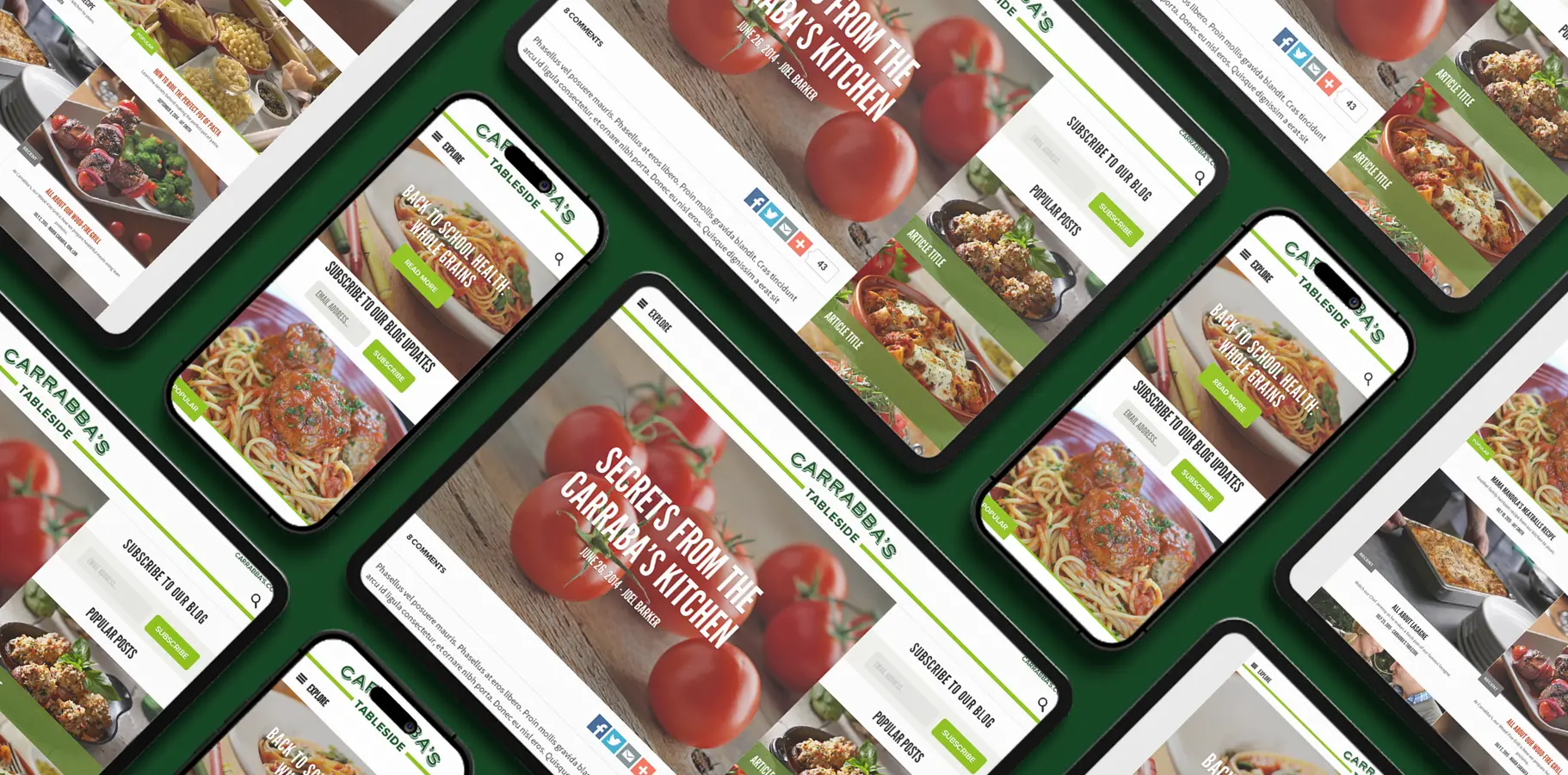
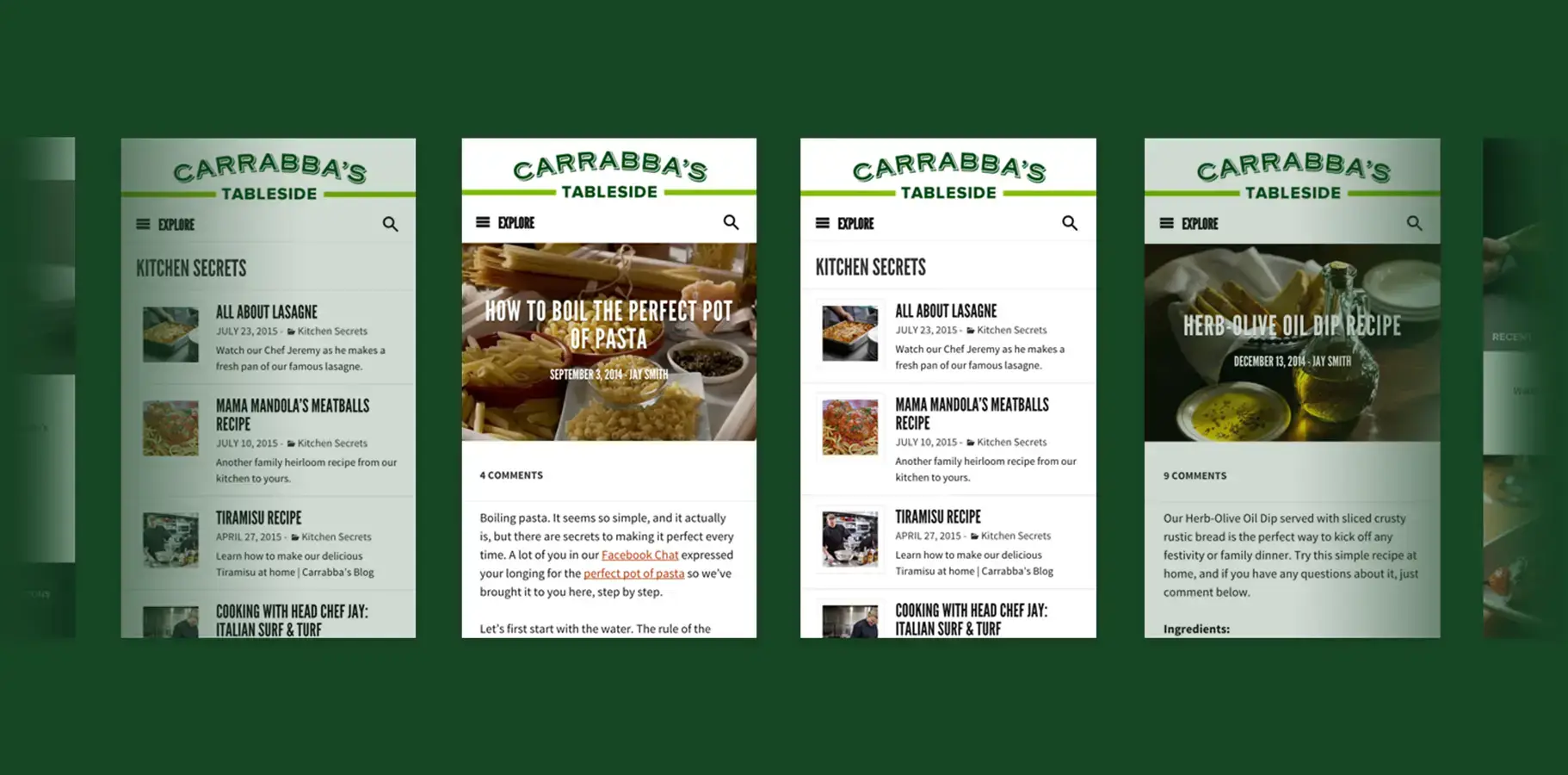
Carrabba's wanted to build a relationship with food enthusiasts who weren't yet customers. The vehicle was a culinary blog, 'Secrets from Carrabba's Kitchen,' positioned as a genuine resource for home cooks wanting to learn authentic Italian technique. The challenge wasn't the content idea. The challenge was that a promotional restaurant blog and a genuinely useful culinary resource require completely different UX decisions, and the brief was asking for both at once.
If the information architecture felt like a marketing funnel, food enthusiasts would bounce. If it felt like a recipe site without a brand presence, Carrabba's got no credit for the value it was delivering. The design had to earn trust first and let the brand follow.
Research & Discovery
I ran moderated usability testing with 12 home cooks across three skill levels, focusing on how they navigated recipe and culinary content online. The consistent finding: experienced home cooks browse by technique and ingredient, not by dish name. Novice cooks browse by outcome. The navigation structure had to serve both without forcing either into an unfamiliar mental model.
I audited eight food-focused content platforms and three restaurant brand blogs to identify where the category had already solved the brand-versus-utility tension. The most successful examples separated discovery browsing from recipe execution layouts. Browsing required density and preview richness. Execution required reading clarity and minimal interface chrome.
Strategic Approach
Content-First Information Architecture
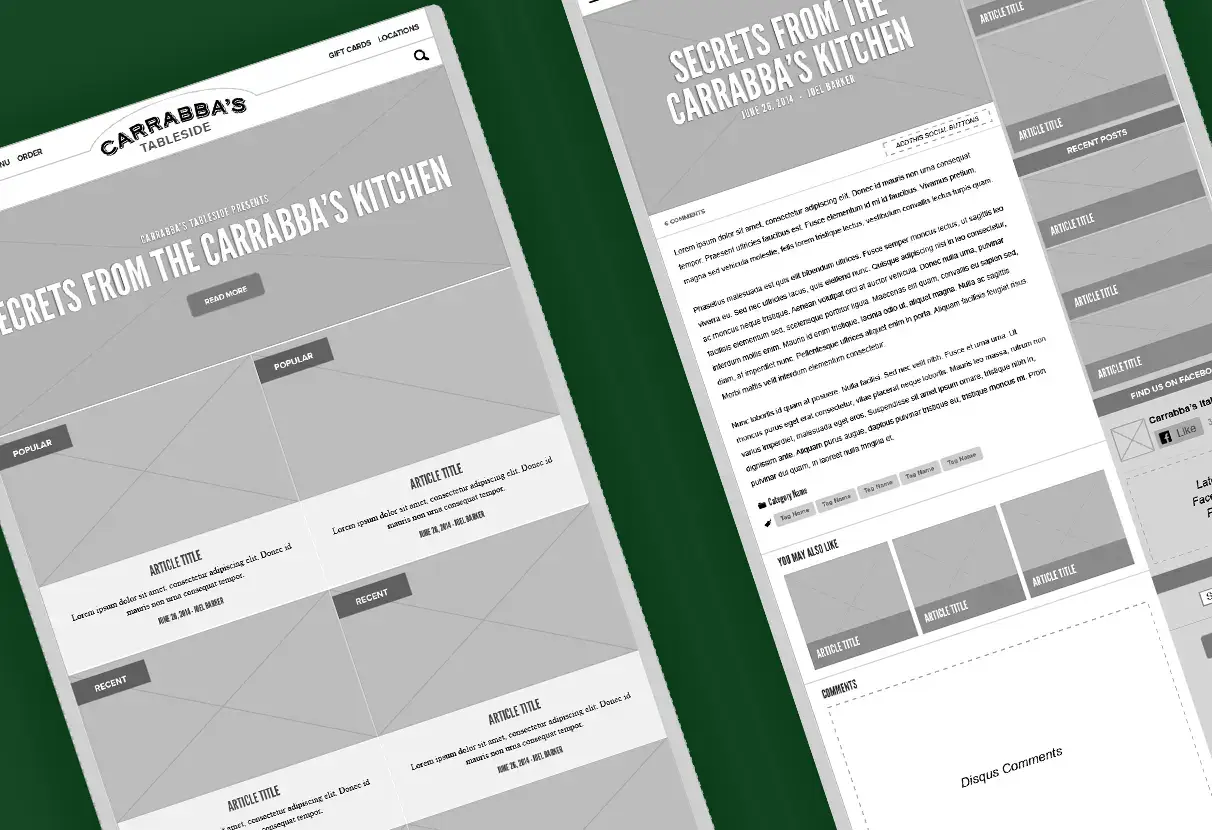
I organized content around technique and ingredient categories rather than promotional themes. 'Kitchen Secrets' as the core category reflected how actual cooks talk about what they're trying to learn. Navigation paths for Popular, Recent, and topical filters gave different user types multiple entry points without forcing a linear journey. The architecture prioritized content discovery over call-to-action placement, which meant restaurant promotion happened through editorial association rather than banner placement.
Mobile-First Reading Experience
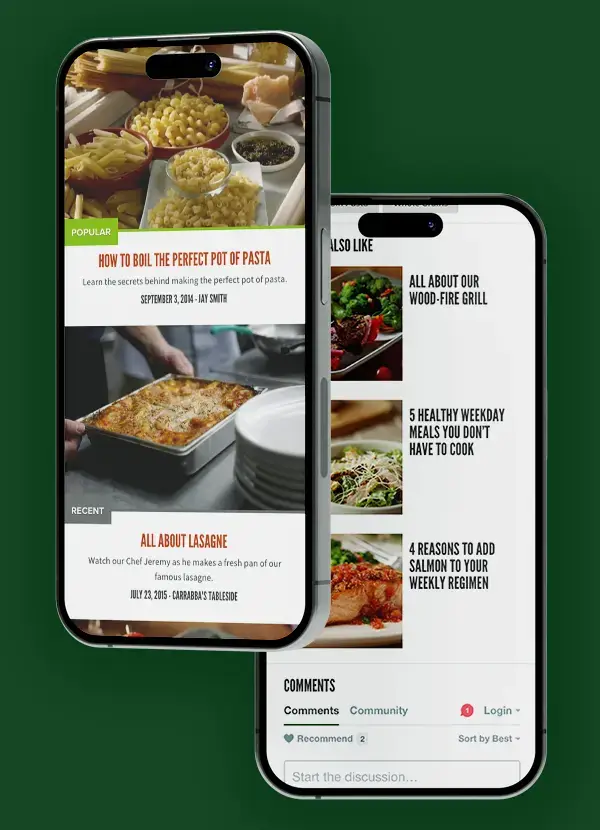
Article layouts used a scroll-optimized vertical flow with ingredient lists and instructions in a clear hierarchy, designed for someone standing at a kitchen counter with one hand occupied. Article card previews balanced density and clarity, giving enough context to make a browsing decision without requiring a click to discover whether the content was relevant. Action-oriented titles like 'How to Boil the Perfect Pot of Pasta' set explicit expectations and drove higher click-through than descriptive headlines.
Strategic Approach
Visual System
The design language balanced Carrabba's brand warmth with the functional clarity that culinary content requires. Rich food photography led the visual hierarchy. The 'Carrabba's Tableside' custom serif evoked Italian authenticity for brand moments, paired with a clean sans-serif for body text that remained readable at small mobile sizes. Photography direction focused on in-process cooking shots rather than finished-dish glamour photography, reinforcing the 'from scratch' brand positioning.
Results & Impact
Path to content - 40% faster time-to-recipe vs. prior site (measured via task timing, n=12 usability sessions)
Mobile traffic engagement - 28% increase in mobile session depth following launch
Brand perception - Post-launch survey: 'inviting' and 'easy to use' cited by 78% of first-time visitors
Editorial adoption - Content team producing on-spec articles independently within 3 weeks of handoff
I led the UX strategy, information architecture, and visual design for this project. Coordination with the external agency building Carrabba's main website required me to establish a shared design system that maintained brand consistency without duplicating the main site experience. I also wrote the editorial guidelines that aligned content creation with the UX strategy, which was something the brief didn't explicitly include but that the project clearly needed. That addition prevented the common failure mode where design quality degrades as real content gets added. If I'd do anything differently, it would be to push for a longer post-launch monitoring period with direct user feedback, rather than relying on analytics alone to validate the IA decisions.