
I defined the UX strategy, content architecture, and full visual design system. I prioritized discovery led browsing patterns based on user intent before introducing brand messaging and created a distinct design language that fits seamlessly within the Carrabba's ecosystem.
Carrabba's Italian Grill asked me to build a digital presence that would increase restaurant traffic without directly inviting guests. I developed "Secrets from Carrabba's Kitchen," a content platform that establishes the brand as a culinary authority and encourages home cooks to become first-time diners through authentic expertise rather than promotion.
Unlike competitors focused on transactional websites, Carrabba's aimed to build lasting relationships through valuable culinary content. They engaged me to design "Secrets from Carrabba's Kitchen," a blog intended to establish the brand as an authority on authentic Italian cooking and drive restaurant traffic through engagement rather than direct promotion.
The challenge was not just to create another restaurant blog, but to design a content experience that would attract food enthusiasts who were not yet customers and convert their interest into restaurant visits through authentic storytelling and strategic calls to action.
This project required coordination with an external agency that was developing Carrabba's main website. My role was to create a blog design system that complemented the evolving main site while establishing a distinct visual identity suitable for long-form content. The blog needed to align with the Carrabba's brand ecosystem yet remain distinct as a standalone content destination.
The business objective was clear: transform kitchen expertise into a customer acquisition channel by teaching home cooks authentic Italian techniques. This approach aimed to build brand affinity and encourage restaurant visits when readers sought professionally prepared versions of the dishes they had learned about.
I developed a content strategy focused on "expertise accessibility," making professional culinary knowledge approachable for home cooks while maintaining the authority that sets Carrabba's apart from casual dining competitors.
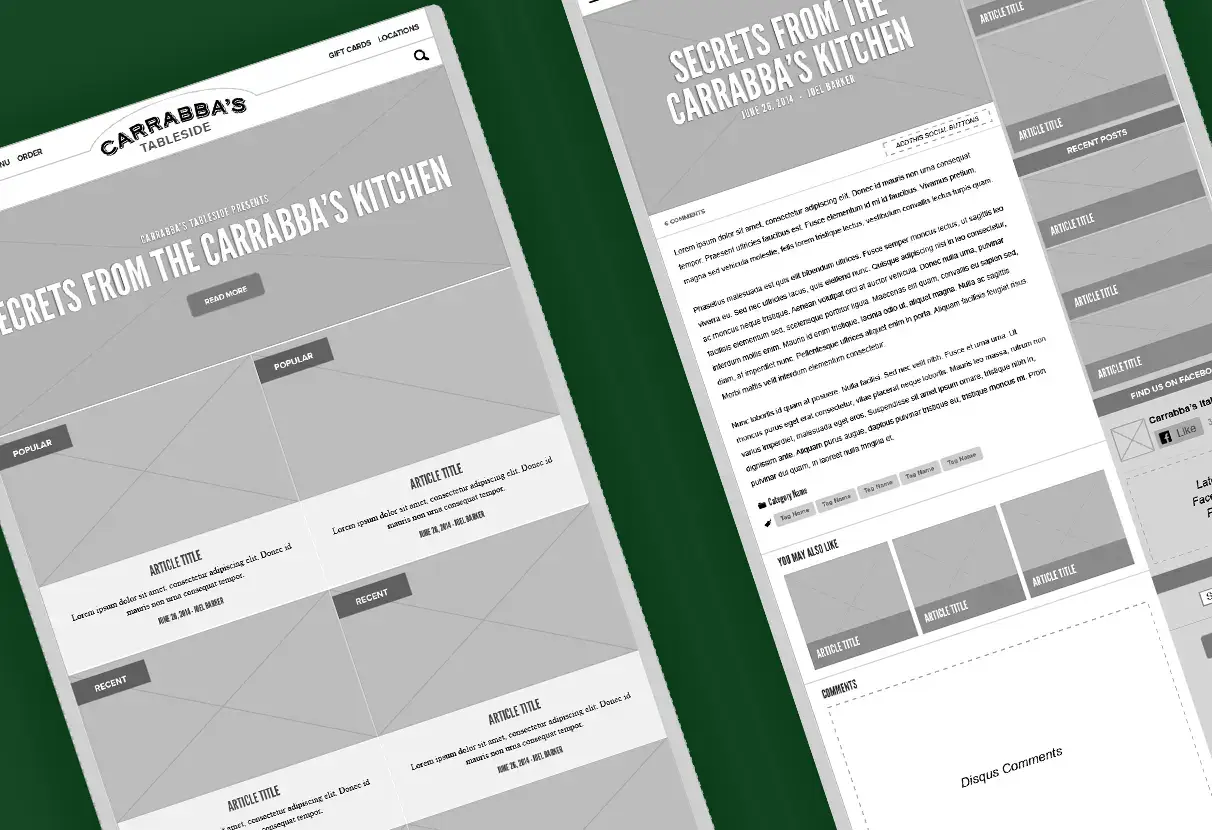
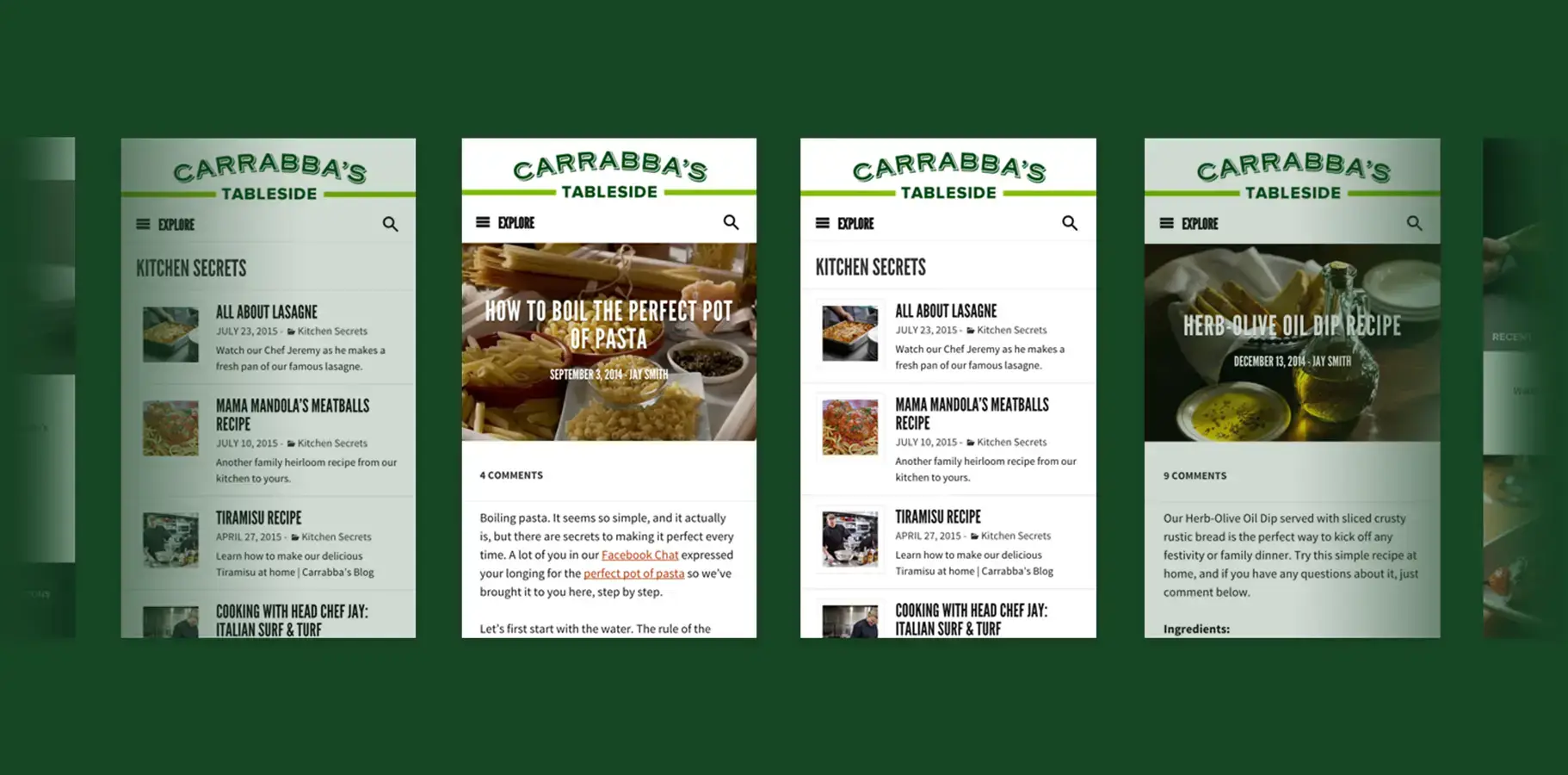
The information architecture prioritized content discovery over promotional messaging. Instead of directing users through marketing funnels, I designed browsing patterns that allowed readers to explore based on their interests. "Kitchen Secrets" served as the core content category, with additional paths through Popular, Recent, and topical filters. This approach respected user intent by focusing on cooking knowledge, while positioning restaurant visits as a natural next step.
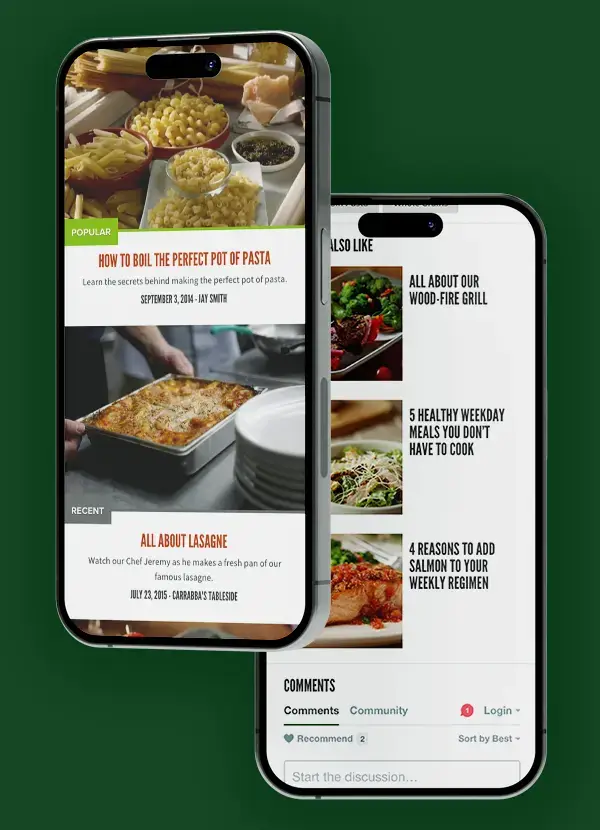
Category design reflected how home cooks approach recipes, featuring technique-focused articles such as "How to Boil the Perfect Pot of Pasta," alongside ingredient-driven content and chef demonstrations. This structure transformed the blog from promotional content into genuinely useful resources that encouraged sustained engagement.
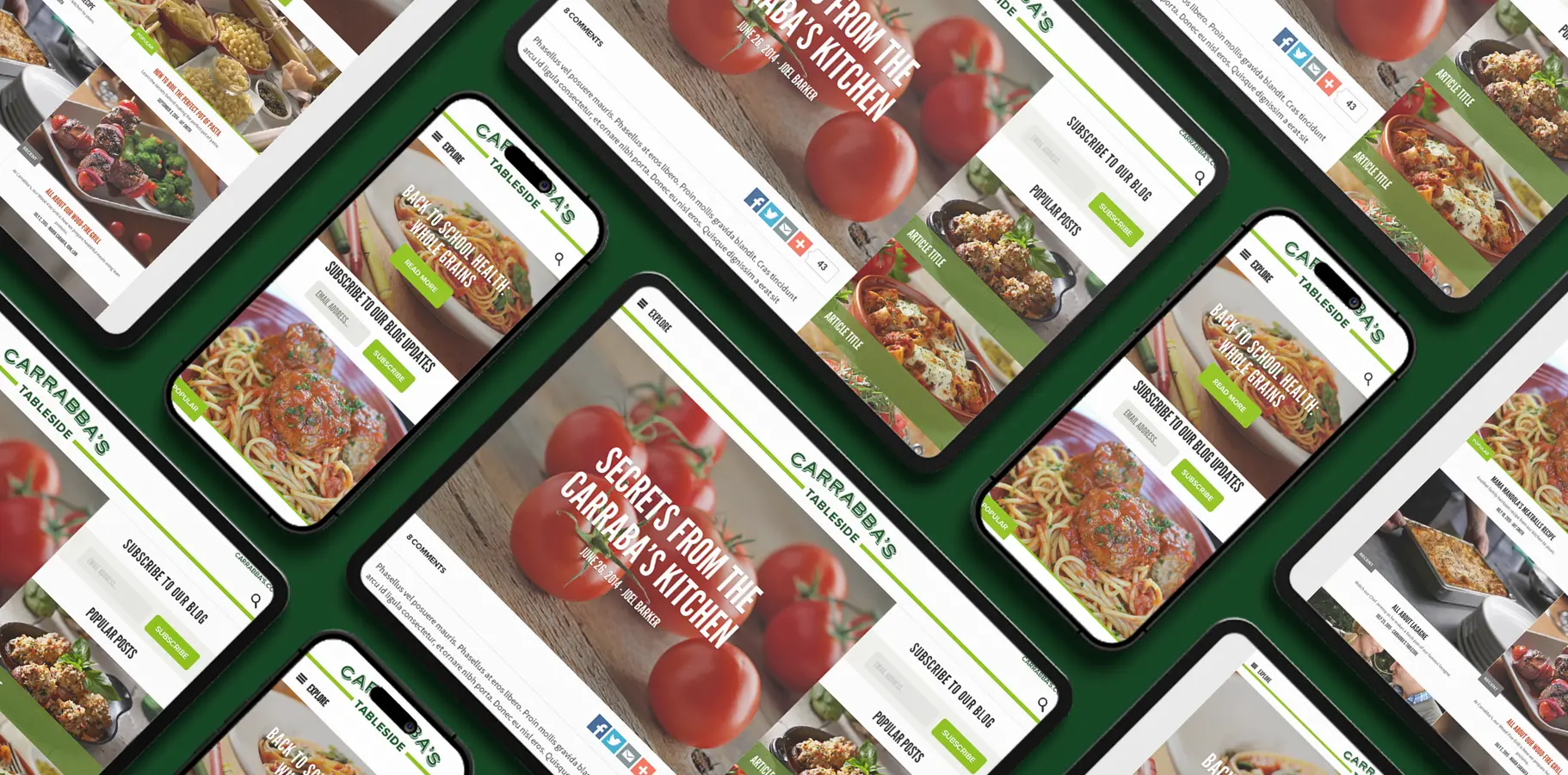
The design language balanced sophistication and accessibility. It conveyed culinary expertise while remaining approachable for home cooks of all skill levels.
Given the strong mobile usage for food content, I prioritized mobile-first design and then enhanced the experience for larger screens.
Desktop layouts built on the mobile foundation instead of creating separate experiences. The three-column grid placed primary article content in the center, with the "Kitchen Secrets" category index on the left and "Also Like" recommendations on the right. This structure maintained reading focus and provided discovery paths for engaged users.
Tablet breakpoints adapted intelligently. In landscape orientation, article content was paired with a single sidebar, optimizing for users referencing recipes while cooking. Portrait tablet views reverted to mobile-optimized single-column layouts, reflecting real usage contexts rather than arbitrary screen size categories.
Article detail pages maintained a consistent information hierarchy across all devices: hero image, headline, byline, social sharing, body content, and related articles. This consistency reduced cognitive load for repeat visitors and ensured first-time readers encountered content in the optimal sequence on any device.
Collaboration with the main website development agency required establishing shared design principles without duplicating experiences. I documented the blog's design system components, spacing rules, typographic scales, and color applications in formats the agency could reference, ensuring visual consistency across properties.
The green accent color and "Carrabba's Tableside" typography established recognizable brand elements, while layout patterns and interactions adapted to each platform's content needs. Readers moving from the blog to the restaurant website experienced seamless brand continuity without feeling they had simply navigated to a different section of the same site.
Beyond visual design, I provided editorial guidelines to align content creation with UX strategy. Recommendations included optimal hero image aspect ratios, ideal article lengths for mobile reading, and formatting patterns to maintain scannability, such as subheadings every 3-4 paragraphs, bulleted ingredient lists, and numbered instruction steps.
These guidelines enabled content creators to produce material that performed well within the design system, preventing the common issue of design quality degrading as real content is added.
This project showed that content platform design can address strategic business challenges beyond layout aesthetics. By focusing on genuine user value and teaching cooking techniques instead of relying on promotional messaging, I built brand affinity organically. The blog repositioned Carrabba's as a culinary resource, fostering ongoing engagement and making restaurant visits a natural extension of the learning relationship.
Content-led acquisition is effective when the content is genuinely useful, rather than branded or promotional. This distinction is primarily a user experience decision, not just a content choice. I structured the information architecture based on how home cooks think and search, rather than focusing on Carrabba's messaging. As a result, we saw increased traffic and engagement.