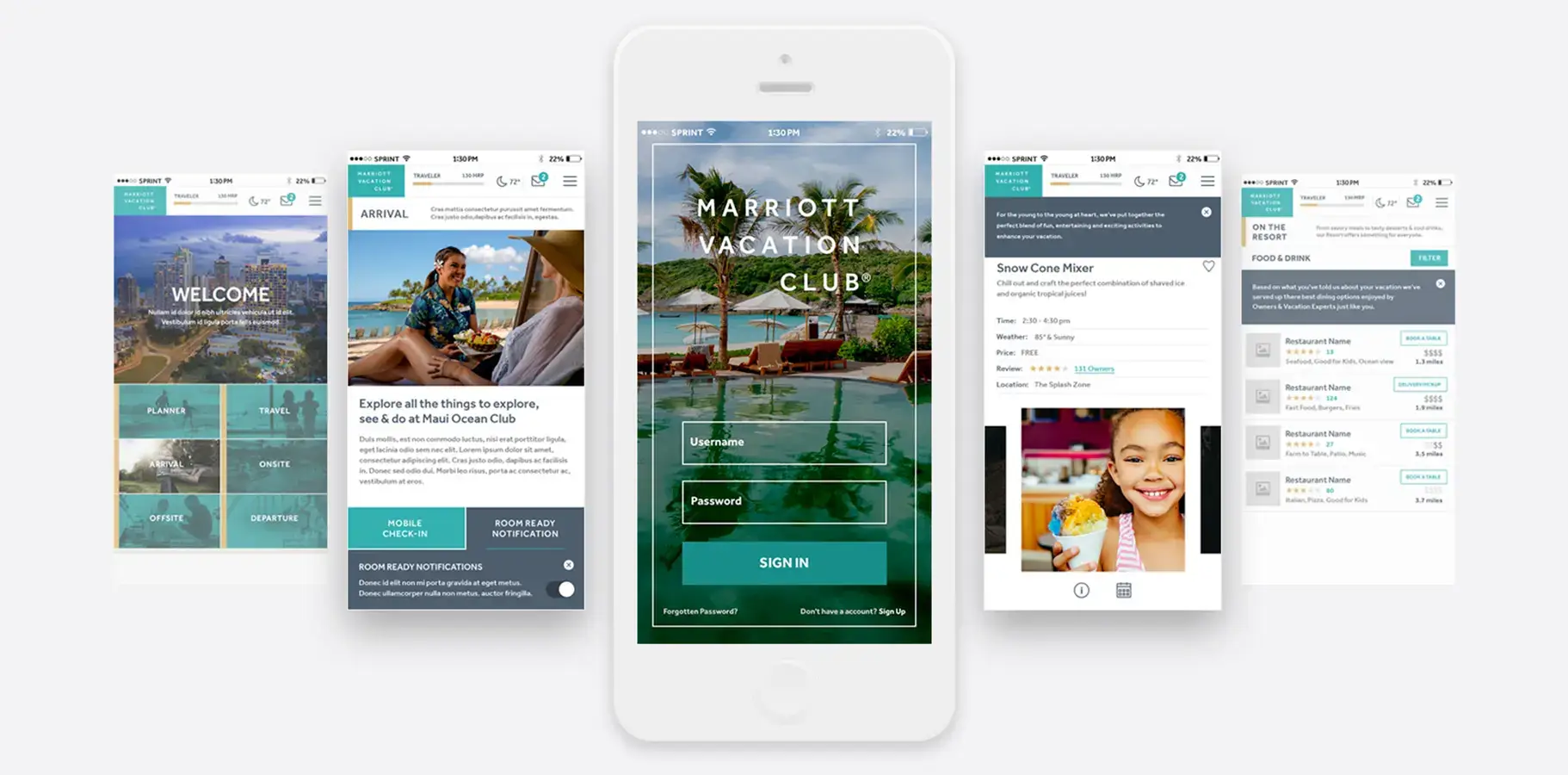
Enterprise UX & digital transformation
Vacation,
made clear.
47 friction points across four brands became one member-first experience—organized around what people want to do, not how the business is structured.
- Role
- Lead Experience Designer
- Scope
- Research, IA, design systems

01 / The problem
A platform built
for the business.
Heuristic audits, behavioral analytics, and research with prospects, new members, and established owners showed the same issue: people could not understand their benefits well enough to use them.
Members had to navigate twelve top-level categories shaped by internal business units—not the goals that brought them to the product.


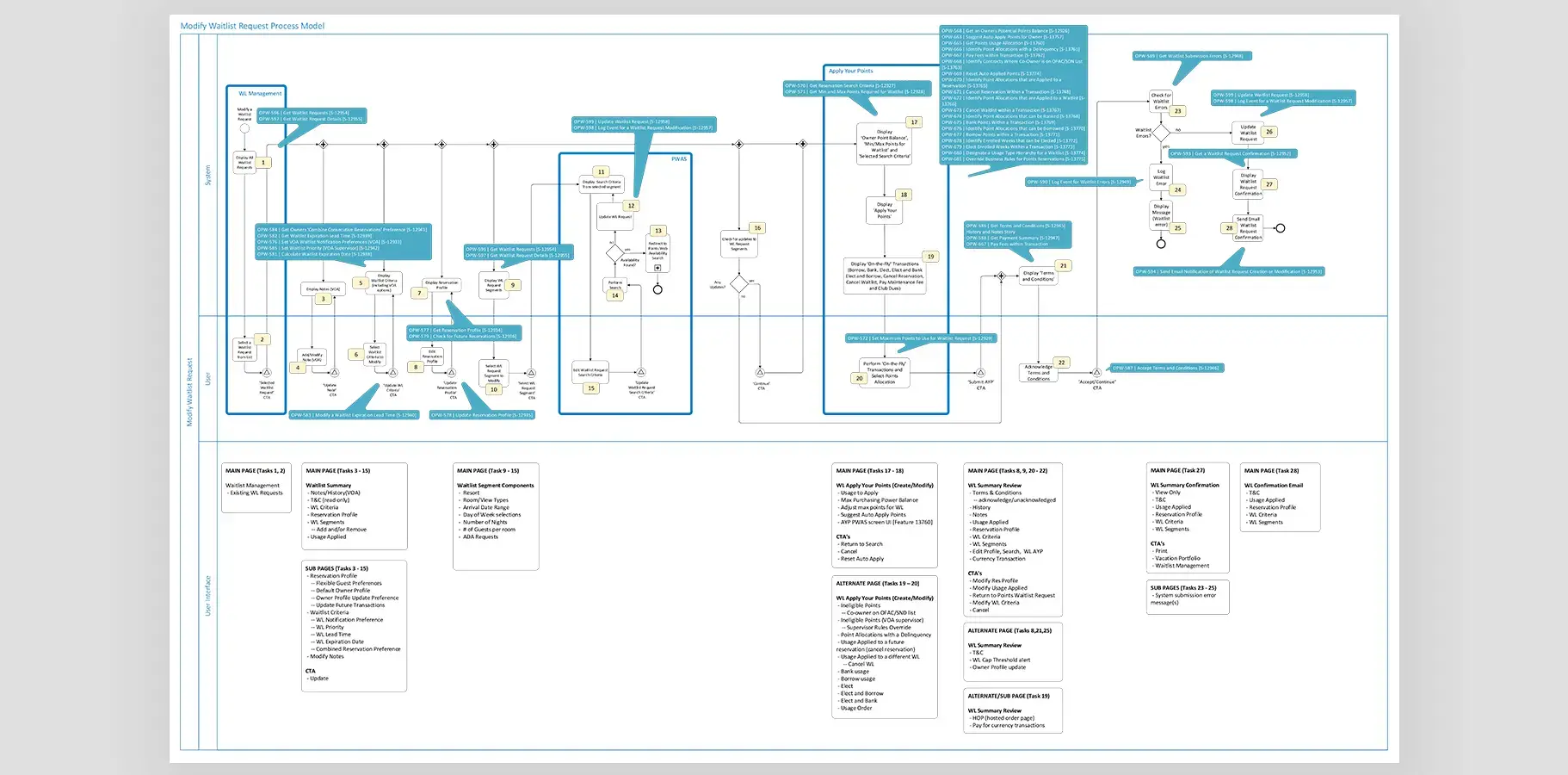
Research made the system visible before simplifying it.
02 / The shift
12 categories
→ 3 intentions.
Find the place and experience that fits.
Understand benefits, points, and ownership.
Move confidently from intent to reservation.

03 / The system
Progressive clarity,
wherever members are.
Gesture-led patterns and card-based progressive disclosure put value before complexity. The system was designed for one-handed use, accessible across iOS, Android, and web, and compliant with WCAG 2.1 AA.
That gave a first-year owner a simple path to a first booking, while still supporting established members managing points, borrowing, and waitlists.



04 / Four brands, one foundation
Consistent in the moments that matter. Distinct where it counts.
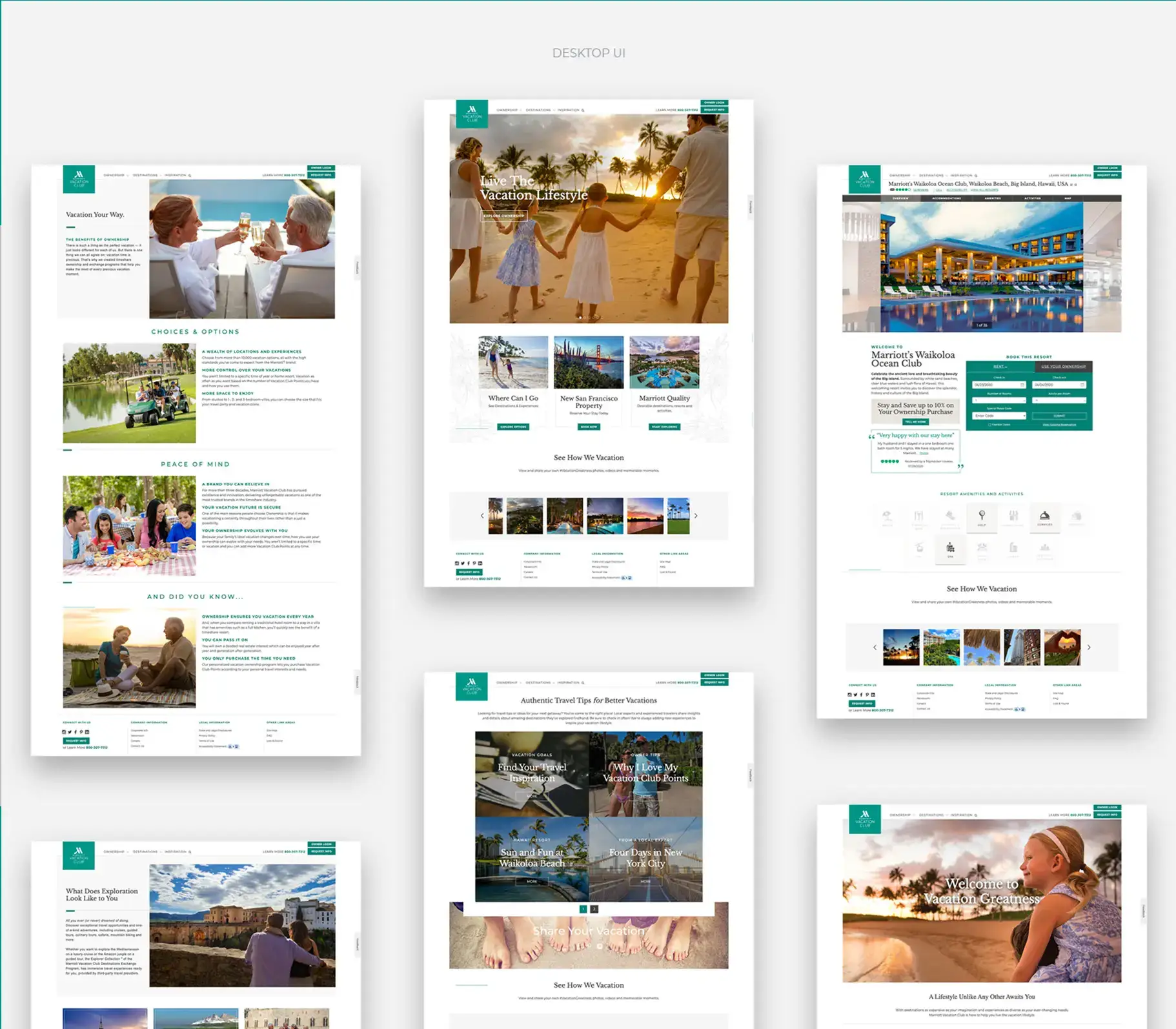
Marriott Vacation Club, Hyatt, Sheraton, and ILG shared interaction patterns, information architecture, and accessibility standards—without flattening the identities their members already recognized.
Governance and team training made the system durable after the engagement ended.
05 / Outcome
Less friction.
More use.