Grounded Climate
Solutions Summit

UX Strategy & Behavioral Design

Client
Grounded
Agency
Pocket Made
Technology
Figma, Photoshop, WordPress

The
Problem

Climate communication has a design problem that's distinct from most digital projects. The subject matter triggers anxiety. Users land on climate-focused platforms already primed for despair, and most design approaches, heavy imagery of destruction, urgent red-and-black palettes, crisis-framing headlines, accelerate that feeling rather than redirecting it.

Grounded's mission was the opposite: connect scientists, innovators, and environmentalists around solutions, not just problems. Their previous site wasn't doing that. Content engagement was low, event registrations were minimal, and the content team had no practical way to update or expand the platform after launch. The brief was to build something that converted urgency into action.

Research &
Discovery

I reviewed behavioral research on emotional regulation and action-taking in high-stakes communication contexts. The consistent finding: audiences exposed to problem-framing alone disengage. Audiences exposed to solution-framing alongside problem acknowledgment show measurably higher intent to act. That research directly shaped the content architecture decision to pair every crisis data point with a corresponding solution story at the component level.

I audited 10 climate and environmental nonprofit sites for UX patterns, then benchmarked against editorial platforms in adjacent spaces: TED, long-form journalism outlets, and science communications sites that had successfully built engaged audiences around complex topics. The editorial model, content-forward, modular, built for sustained reading rather than quick scanning, was the clear direction.

Strategic
Approach

Visual Language Built for Emotional Regulation

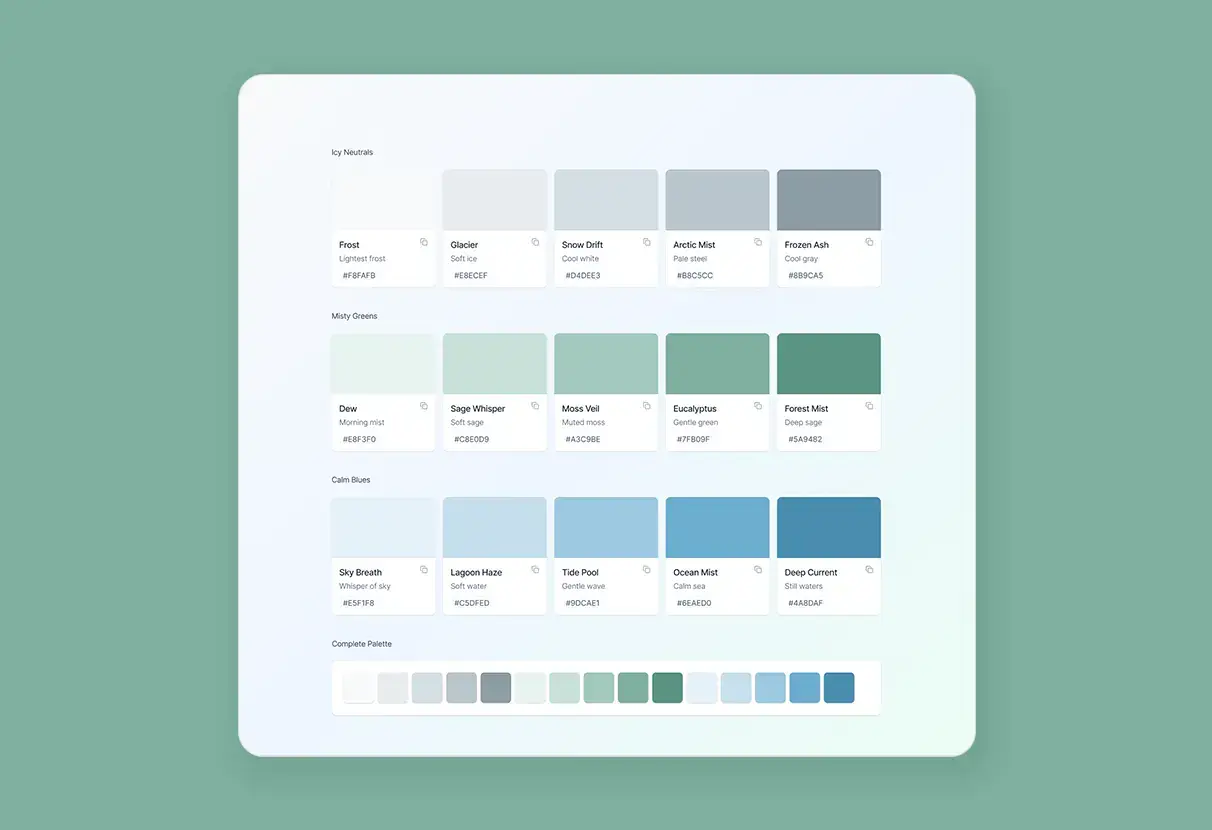
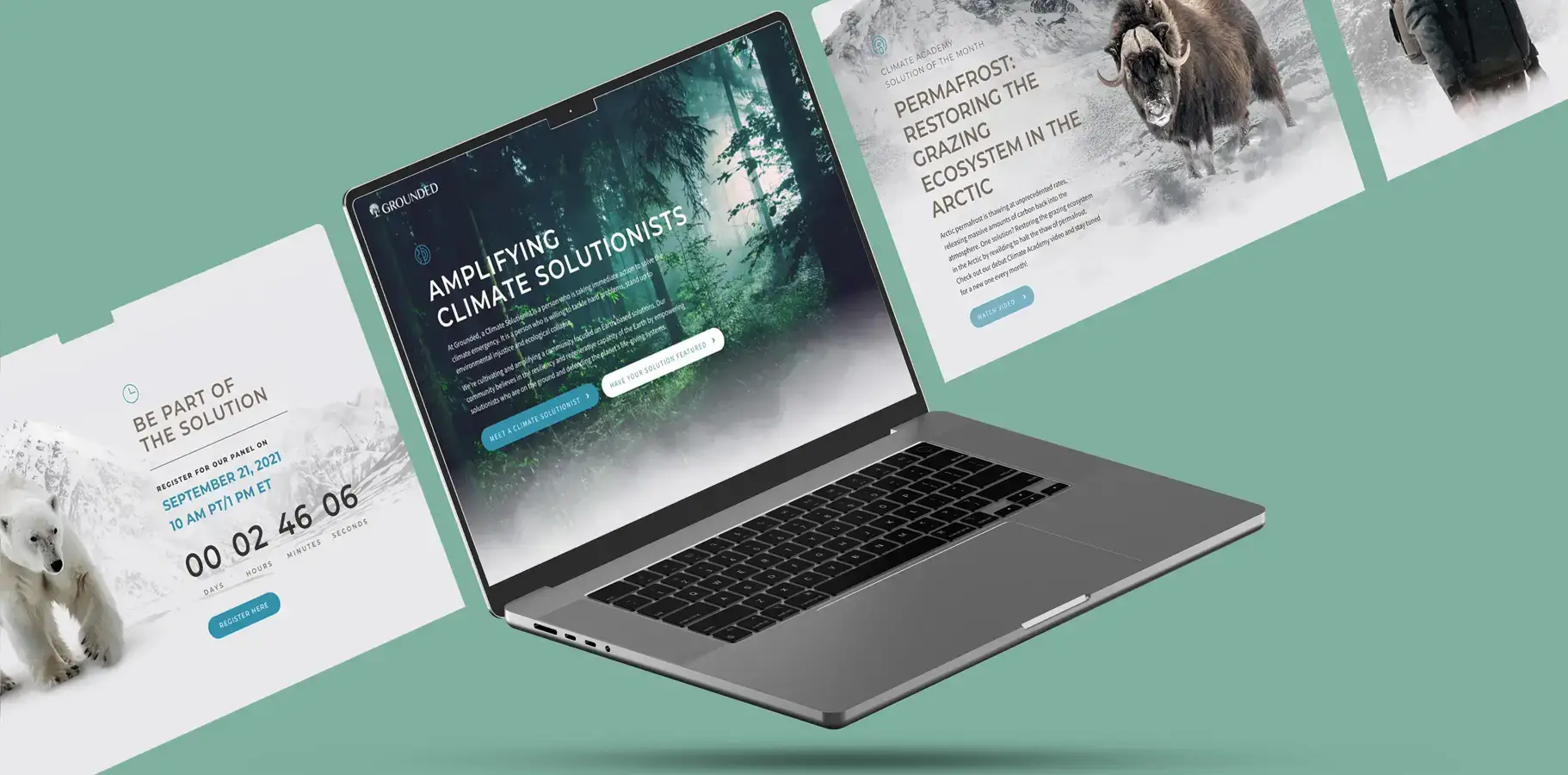
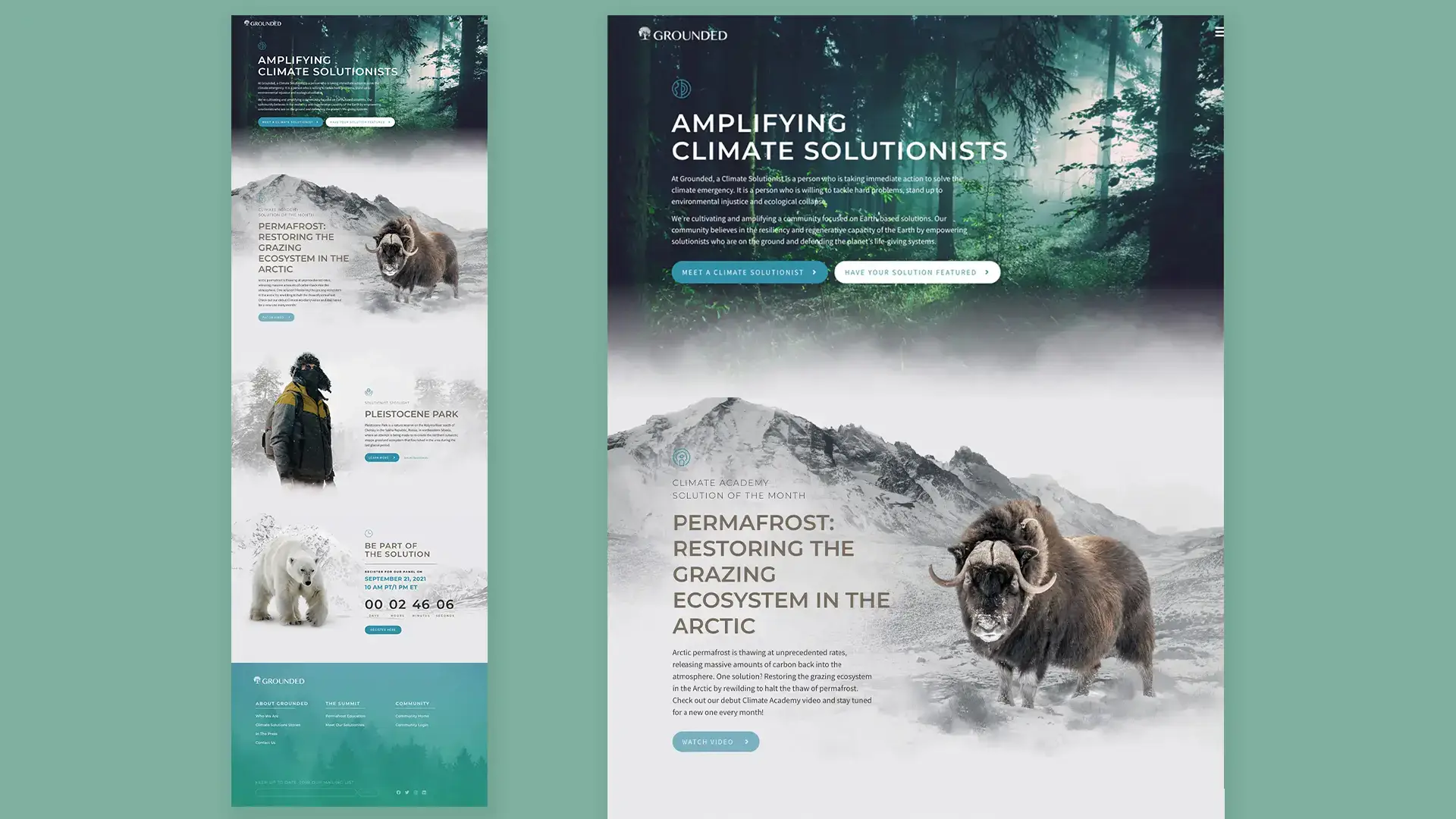
The color system used icy neutrals, misty greens, and calm blues drawn from Arctic and old-growth forest photography. High-contrast crisis colors were deliberately excluded. Photography direction focused on endurance and renewal over destruction: intact ecosystems, collaboration between researchers, moments of discovery. Parallax fades and slow scroll animations created a sense of calm depth rather than urgency.

Content Architecture

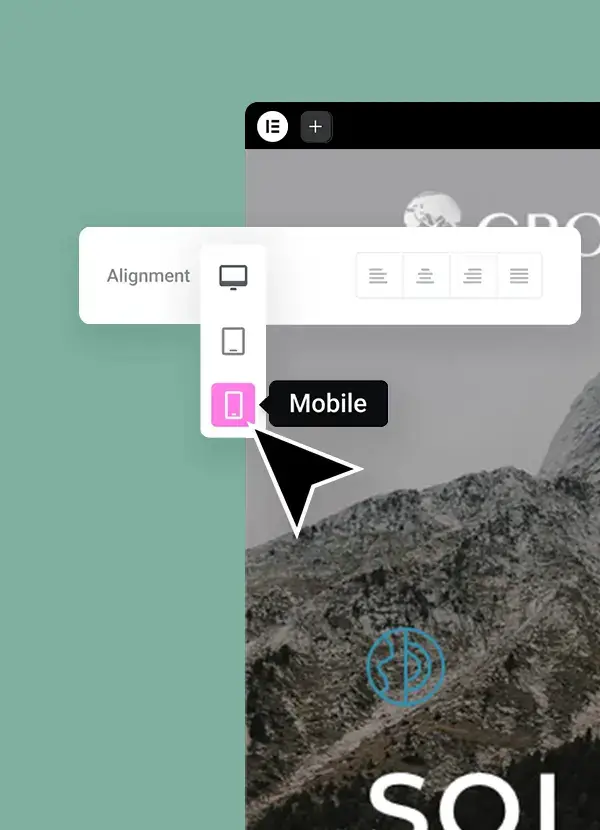
I designed modular story components that could highlight research findings, feature individual solutionists, and announce live events without the content team needing developer support. A custom WordPress module handled live event countdowns and registration integration. Navigation used a clear three-level hierarchy with consistent iconography, allowing users to move through complex climate topics at a self-directed pace rather than being pushed through a conversion funnel.

CMS for Long-Term Scalability

The build was explicitly designed for a small content team to maintain and expand without an agency on retainer. All components were modular and documented. The development approach prioritized responsive performance, keeping cinematic motion without sacrificing load speed, since a significant portion of the target audience accessed the platform from regions with slower connections.


Results &
Impact

My
Contribution

I owned the UX strategy, visual design system, and front-end development on this project. Content strategy was developed collaboratively with the Grounded team, with me defining the component architecture and emotional design principles they built their editorial approach around. The behavioral research framing was something I brought to the project independently based on what I knew about climate communication and its failure modes. If I were revisiting this, I'd push for qualitative research with the target audience earlier in the process to validate the emotional framing assumptions before they were baked into the visual system.

Prev
Next